

Top SaaS Inventory Management Tools to Track & Govern SaaS Sprawl in 2026


As organizations continue to expand their use of cloud-based applications, maintaining visibility into the full SaaS environment has become increasingly complex. Teams across security, IT, and procurement often struggle to track which SaaS tools are in use, who has access to them, and how data flows between applications. This lack of centralized visibility contributes to operational inefficiencies, unmanaged access, and growing governance gaps.
SaaS sprawl frequently emerges when organizations adopt applications without consistent oversight, creating challenges around cost control, security monitoring, and compliance readiness. SaaS inventory management tools help address these challenges by enabling continuous application discovery, usage tracking, and governance across modern SaaS environments.
8 Best SaaS Inventory Management Tools for Complete SaaS Visibility
As SaaS environments grow more decentralized, organizations need reliable ways to identify every application in use and understand how access, usage, and integrations evolve. The following SaaS inventory management tools help security teams, IT teams, and SaaS administrators establish continuous visibility, reduce SaaS sprawl, and support governance across complex SaaS ecosystems.
1. Reco
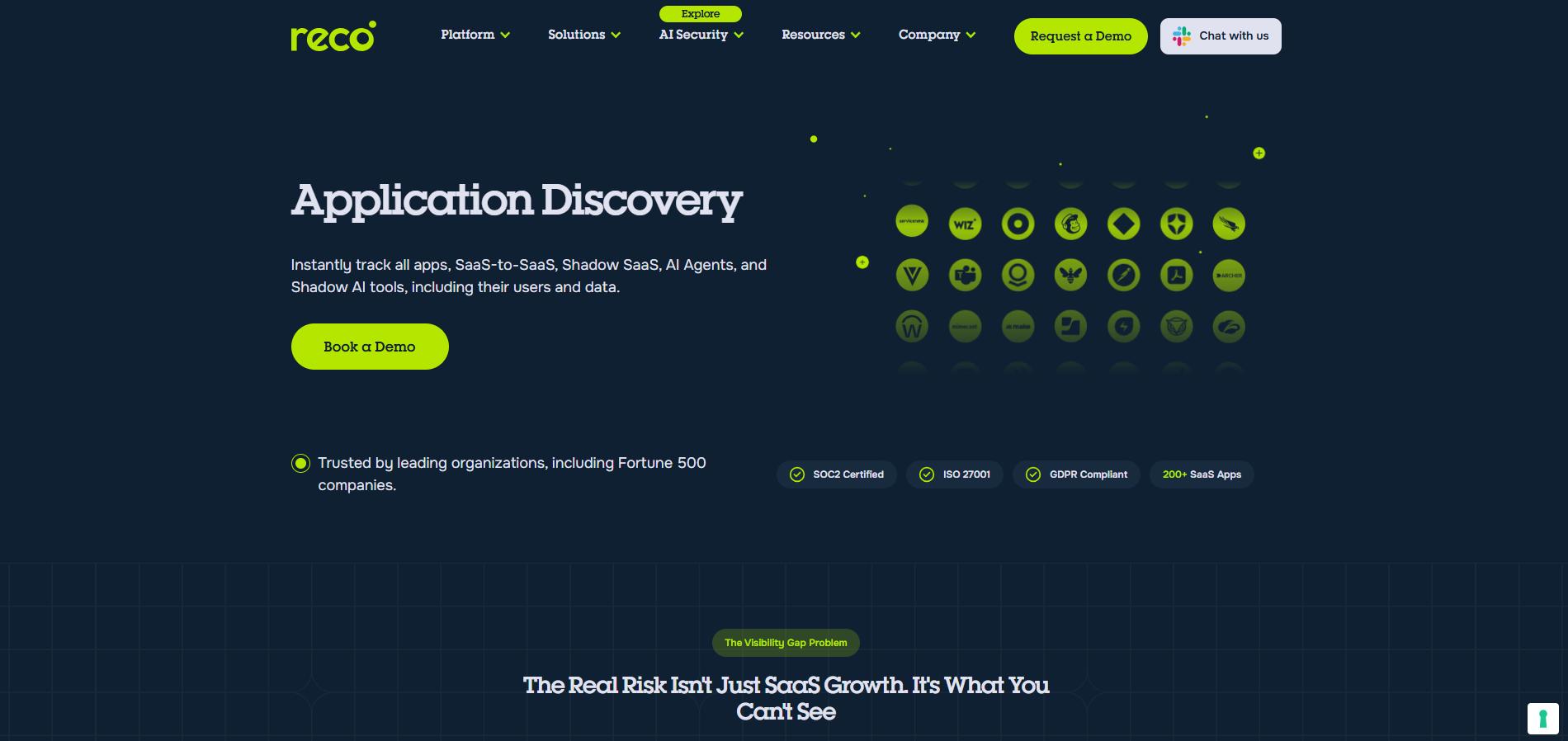
Reco is a SaaS security platform that provides continuous discovery and inventory of SaaS applications by analyzing identity activity, access patterns, and application integrations across the environment. Rather than relying solely on financial or SSO-based discovery, Reco builds a live SaaS inventory by monitoring how users, service accounts, OAuth applications, and third-party integrations interact with SaaS platforms, enabling teams to understand what applications exist, who has access, and how data is exposed in real time.
Best for: Security teams, IT teams, and SaaS administrators that need identity-driven SaaS inventory visibility with a strong focus on access governance, OAuth risk, insider threats, and continuous monitoring across enterprise SaaS environments.
2. Zylo
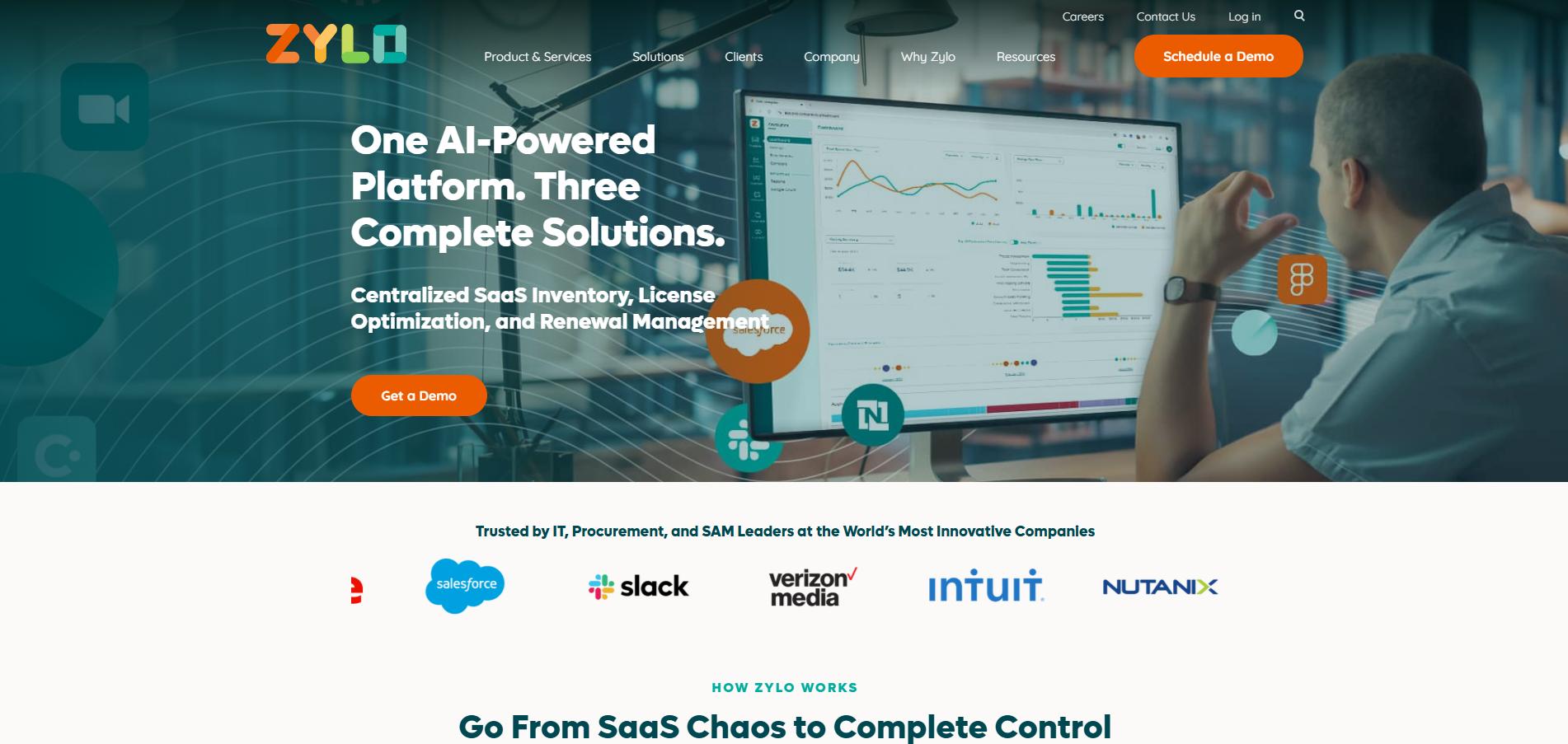
Zylo is an enterprise SaaS management platform built to uncover, centralize, and govern SaaS applications by combining AI-powered discovery with a system of record for usage, spend, licenses, and renewals. Its advanced discovery engine uses machine learning to identify and categorize all SaaS applications - including those acquired outside traditional IT channels - giving organizations a comprehensive inventory that supports optimization, governance, and cost control.
Best for: Teams looking for AI-driven SaaS discovery with unified visibility into application usage, spend, license optimization, and renewal workflows across large or complex SaaS portfolios.
3. BetterCloud
BetterCloud is a SaaS management platform that helps IT and security teams gain centralized visibility and control over their SaaS environments. It enables organizations to discover SaaS applications, manage user lifecycles, automate administrative actions, and enforce governance policies across users, files, and access configurations from a single operational interface.
Best for: IT and security teams that need centralized SaaS discovery combined with workflow automation, access management, and policy enforcement across large and distributed SaaS environments.
4. Lumos
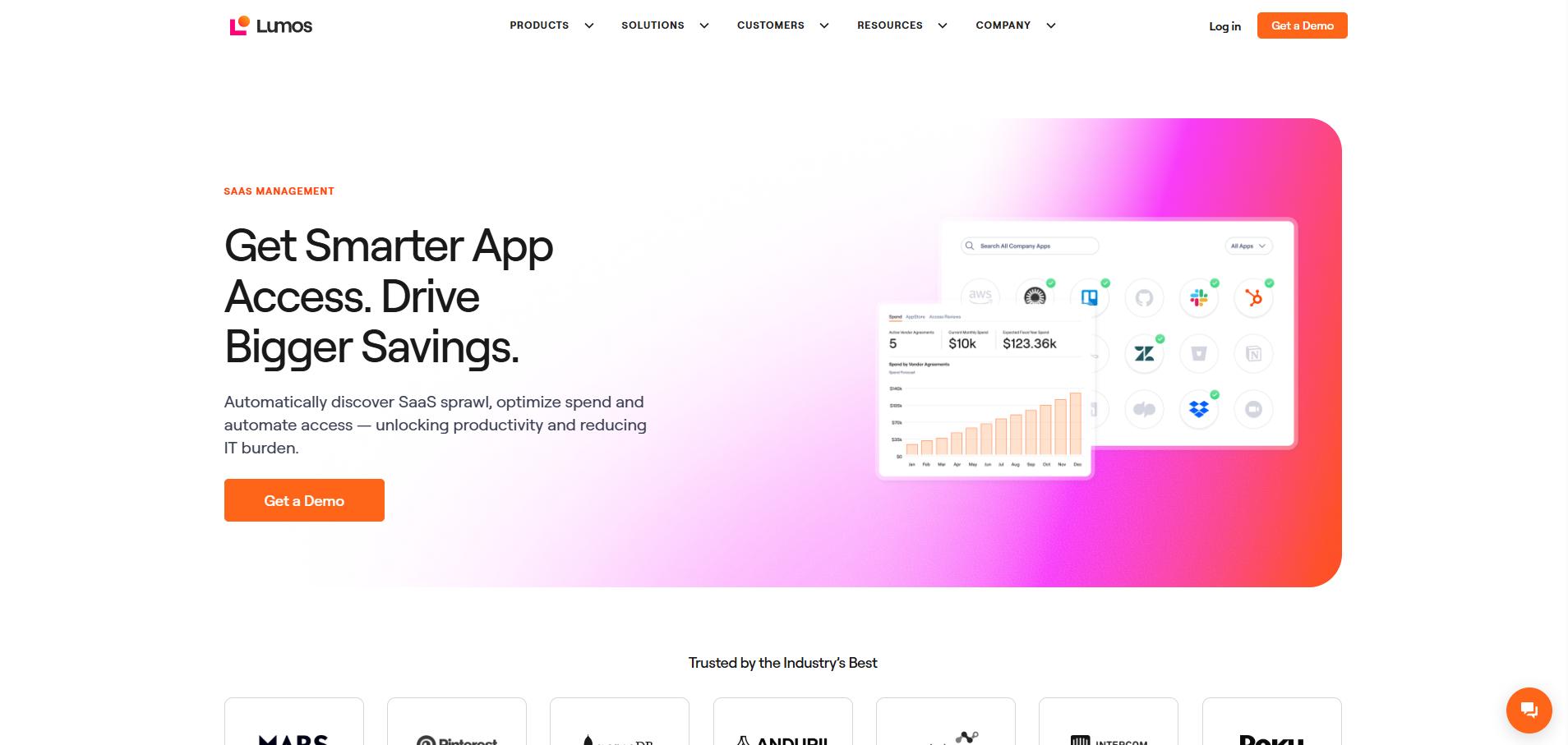
Lumos is an AI-driven SaaS management and identity governance platform designed to help organizations discover, manage, and govern all SaaS applications across their environment from a single interface. The platform provides visibility into both approved and shadow IT applications, unifies usage, access, and spending data, and supports automated workflows to reclaim unused licenses, optimize spend, and enforce consistent access policies across users and services.
Best for: IT, security, and compliance teams that need unified SaaS inventory visibility combined with identity-driven access governance, spend optimization, and automation across complex enterprise SaaS estates.
5. Productiv
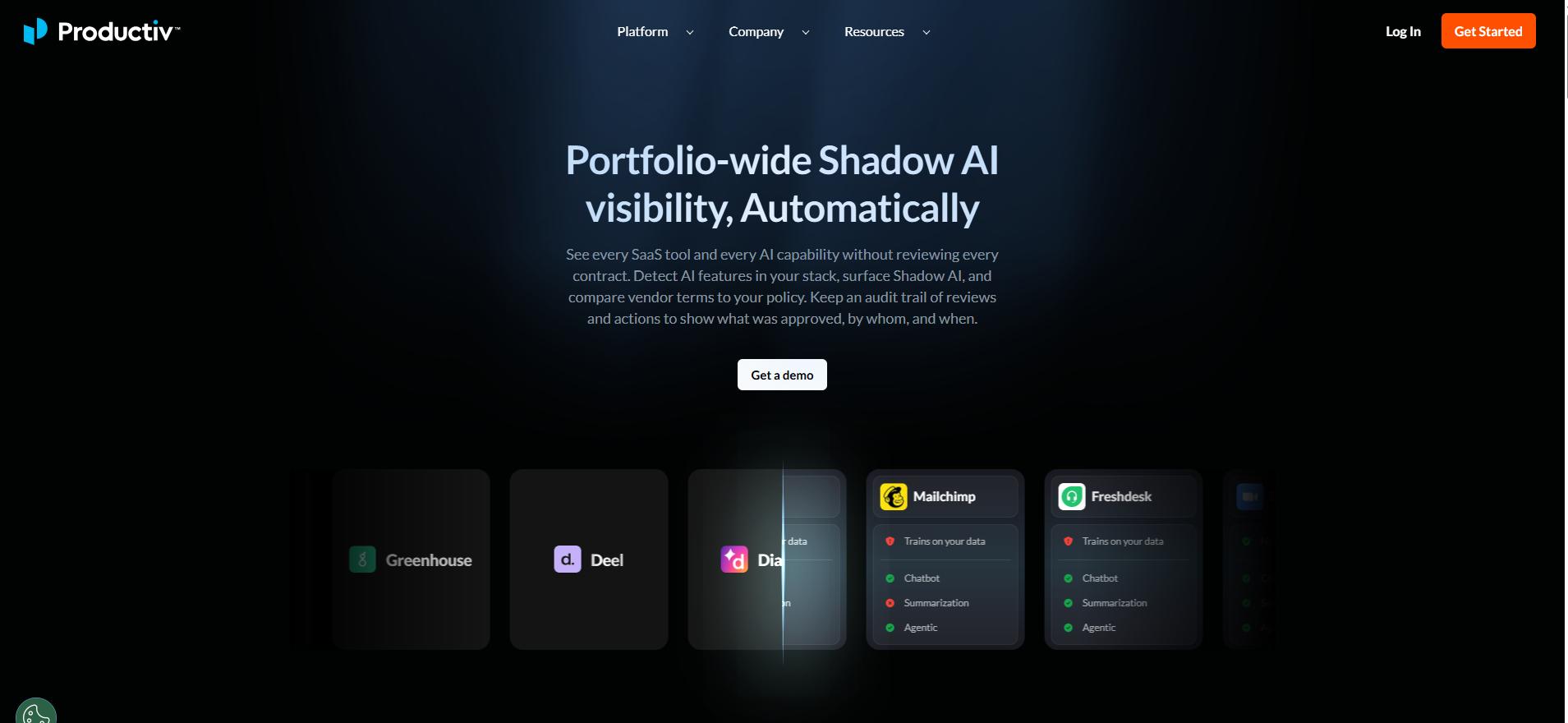
Productiv is a SaaS intelligence platform that provides organizations with continuous visibility into their SaaS application portfolio by combining application discovery, usage analytics, and user engagement insights. It helps IT, security, and business teams understand which SaaS applications are in use, how frequently they are used, and which users or departments derive value from them, enabling more informed decisions around governance, optimization, and renewal management.
Best for: IT, finance, and SaaS operations teams that need detailed usage analytics and application-level insights to optimize SaaS portfolios, reduce redundant tools, and support data-driven governance decisions.
6. Adaptive Shield
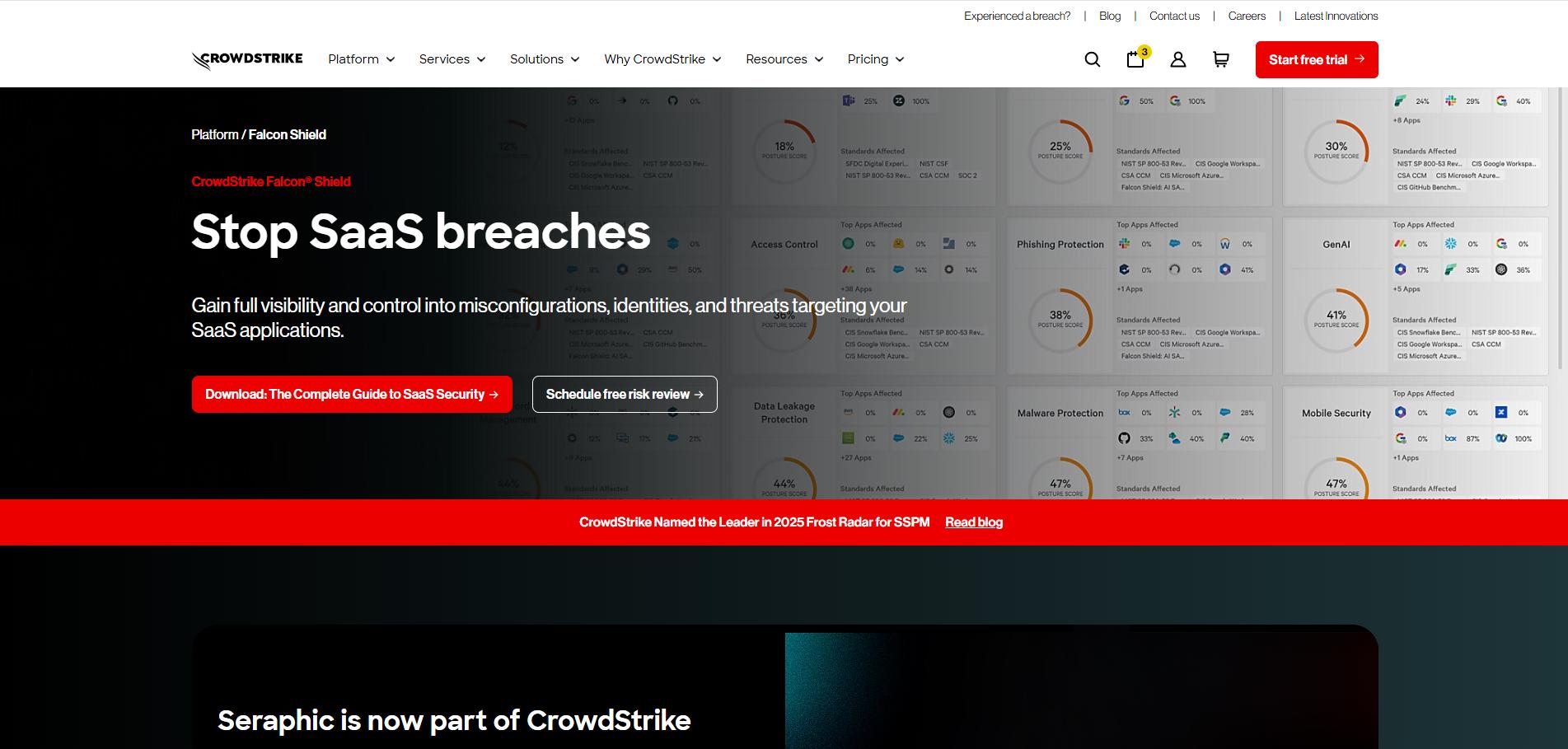
Adaptive Shield, now part of CrowdStrike, is a SaaS security posture management capability delivered through CrowdStrike Falcon Shield that helps organizations maintain visibility into SaaS applications, configurations, identities, and integrations. It continuously monitors SaaS environments to identify misconfigurations and risky access patterns, supporting stronger governance and compliance across a broad SaaS stack.
Best for: Security teams that need continuous SaaS posture monitoring and governance across many SaaS applications, with visibility into identity and configuration risk.
7. DoControl
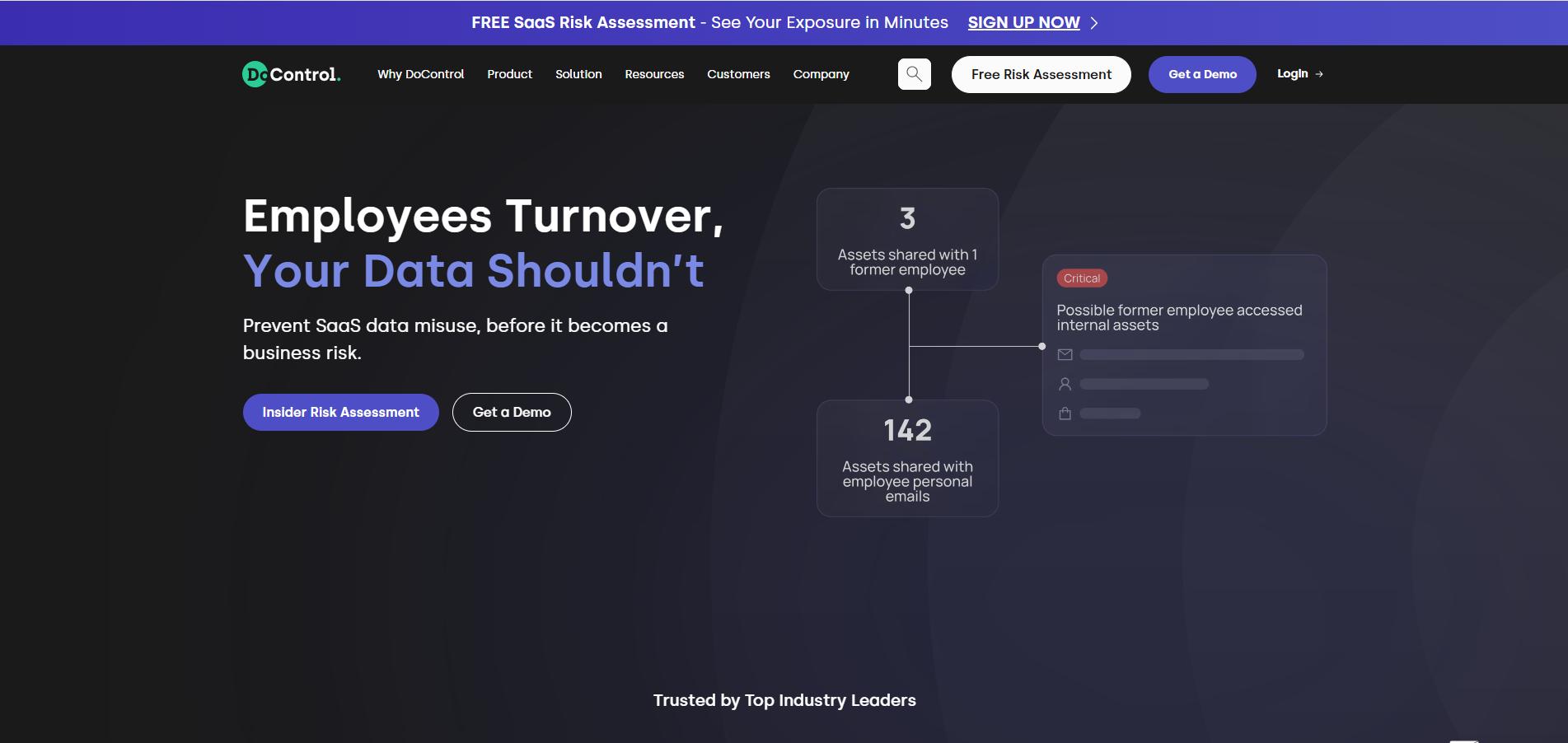
DoControl is a SaaS security and access governance platform that focuses on providing visibility and control over SaaS applications, identities, and data interactions. It helps organizations inventory SaaS applications and integrations by monitoring user activity, third-party access, and data sharing events, enabling security teams to enforce granular policies and reduce the risks associated with overexposed access and unmanaged SaaS usage.
Best for: Security and compliance teams that need detailed visibility into SaaS access, third-party integrations, and data interactions, with a strong emphasis on enforcing access controls and preventing data exposure across SaaS environments.
8. Obsidian Security
Obsidian Security is a SaaS security platform that provides deep visibility into SaaS applications, user activity, and third-party integrations by analyzing identity behavior and API interactions. It helps organizations build an accurate SaaS inventory while detecting risky access patterns, compromised accounts, and malicious OAuth applications across SaaS environments, enabling security teams to govern SaaS usage and reduce identity-based risk.
Best for: Security teams that need SaaS inventory visibility combined with advanced detection of identity threats, risky OAuth integrations, and anomalous user behavior across enterprise SaaS applications.
SaaS Inventory Management Tools Comparison
The table below compares leading SaaS inventory management tools based on their primary inventory focus, deployment approach, and the types of teams they best support. The comparison is intended to help security, IT, and SaaS administrators quickly assess which platforms align with their visibility and governance priorities.
Essential Features to Look for in a SaaS Inventory Management Platform
The effectiveness of a SaaS inventory management platform depends on its ability to provide continuous visibility, contextual access insights, and governance controls across a rapidly changing SaaS environment. The following features represent the core capabilities organizations should evaluate when selecting a platform.
- Automated SaaS Discovery Across Departments: A strong platform should automatically identify SaaS applications used across all departments, including those adopted outside formal IT procurement processes. This ensures the inventory reflects both approved tools and shadow IT without relying on manual reporting or periodic audits.
- Continuous Monitoring of App Usage and Access: Beyond initial discovery, SaaS inventory tools must continuously track how applications are used and who has access to them. Ongoing monitoring helps teams detect dormant apps, excessive permissions, and changes in usage patterns that may introduce operational or security risk.
- Visibility Into Non-Human Identities and Service Accounts: Modern SaaS environments rely heavily on service accounts, API tokens, and automated workflows. Inventory platforms should surface these non-human identities, map their permissions, and show how they interact with SaaS applications to prevent unmanaged access paths.
- OAuth App Governance and Risk Scoring: OAuth-based integrations introduce indirect access to sensitive SaaS data. Effective platforms identify connected OAuth applications, assess the scope of permissions granted, and help teams evaluate integration risk so that excessive or unnecessary access can be addressed.
- Policy Controls for High Risk SaaS Integrations: Inventory visibility should be paired with governance controls that allow teams to define and enforce policies for risky applications and integrations. This includes flagging violations, supporting remediation workflows, and maintaining consistent standards across the SaaS stack.
- Integration With SIEM, IAM, and Ticketing Tools: SaaS inventory data becomes more actionable when integrated with existing security and IT workflows. Native integrations with SIEM, IAM, and ticketing platforms help teams correlate SaaS activity with identity events, security alerts, and operational processes.
- Readiness for AI and Copilot Connected SaaS Environments: As AI assistants and copilots become embedded in SaaS platforms, inventory tools must account for how these features access data and operate across applications. Readiness includes visibility into AI-enabled integrations, permissions, and usage patterns that affect governance and compliance.

Dr. Tal Shapira
Cofounder & CTO at Reco

Tal is the Cofounder & CTO of Reco. Tal has a Ph.D. from Tel Aviv University with a focus on deep learning, computer networks, and cybersecurity and he is the former head of the cybersecurity R&D group within the Israeli Prime Minister's Office. Tal is a member of the AI Controls Security Working Group with CSA.

Expert Insight: How to Build a SaaS Inventory That Actually Stays Accurate
In practice, the biggest mistake teams make with SaaS inventory is treating it as a one-time discovery exercise. SaaS environments change constantly, and an inventory that is not tied to identity activity becomes outdated almost immediately.
Based on hands-on work with SaaS security and governance platforms, here is what actually keeps inventories accurate:
- Anchor Inventory to Identity Activity: Track who is accessing apps, integrations, and service accounts instead of relying only on spend or SSO data.
- Pay Attention to OAuth and Non-Human Identities Early: These often introduce more risk than primary user accounts and are commonly missed during initial discovery.
- Review Inventory Continuously, Not Quarterly: New apps, integrations, and AI features appear weekly in large organizations.
The Takeaway is Simple: A SaaS inventory only works when it reflects real access and behavior, not static app lists.
How to Choose the Right SaaS Inventory Management Tool for Your Organization
Selecting the right SaaS inventory management platform requires aligning technical capabilities with organizational priorities around visibility, governance, and scale. The table below outlines key evaluation criteria and explains what each factor means in practice when comparing tools:
How Reco Strengthens SaaS Inventory With Identity-Driven SaaS Security
Reco enhances SaaS inventory management by connecting application discovery with identity context, access intelligence, and continuous monitoring across modern SaaS environments. The capabilities below show how Reco strengthens visibility and governance as SaaS ecosystems grow more complex.
- Real-Time SaaS Discovery With Context on Who Has Access: Reco builds a live SaaS inventory by continuously discovering applications based on real identity activity and integrations, rather than static records or spend data alone. This approach provides visibility into which applications exist, how they are accessed, and who interacts with them across the environment through Reco’s identity-aware application discovery capabilities available in its SaaS application discovery platform.
- Visibility Into Privileged Roles, OAuth Apps, and Shadow Integrations: Reco helps organizations understand how privileged roles, OAuth applications, and third-party integrations expand access within SaaS environments by correlating identities, permissions, and integration behavior. This visibility enables stronger access governance and oversight through Reco’s identity and access governance capabilities.
- Detecting Insider Risk Across SaaS Environments: Reco analyzes identity behavior across SaaS applications to identify abnormal access patterns and risky activity that may indicate insider threats. By tying behavior to specific identities and applications, teams gain clearer insight into which SaaS assets contribute to elevated risk using Reco’s identity threat detection and response platform.
- Supporting Compliance and AI Governance With Continuous Monitoring: Reco supports compliance and AI governance by continuously monitoring SaaS configurations, access activity, and data exposure, including environments that rely on AI-enabled SaaS tools and copilots. This ongoing oversight helps organizations maintain governance readiness as SaaS usage evolves through Reco’s SaaS posture management and compliance platform.
Conclusion
SaaS inventory management has become a foundational requirement for organizations operating in increasingly decentralized SaaS environments. Without continuous visibility into applications, access, and integrations, teams struggle to manage sprawl, reduce risk, and maintain governance at scale. By choosing the right SaaS inventory management tools and prioritizing identity-driven visibility, organizations can regain control over their SaaS ecosystems and support secure, compliant growth as SaaS adoption and AI-enabled capabilities continue to expand.
What is the difference between SaaS inventory management and SaaS security posture management?
SaaS inventory management focuses on identifying which SaaS applications are in use and understanding basic usage and ownership. SaaS security posture management builds on that inventory by continuously evaluating configurations, access settings, and security risks across those applications. Key differences include:
- SaaS inventory answers what applications exist and who uses them
- SaaS security posture management evaluates how securely those applications are configured
- Inventory provides visibility, while posture management supports ongoing governance and risk reduction
Learn more about SaaS security posture management.
How do SaaS inventory tools discover shadow IT applications?
SaaS inventory tools uncover shadow IT by analyzing signals beyond traditional procurement and IT-owned systems. This allows organizations to detect applications adopted independently by teams or individuals. Common discovery methods include:
- API based integrations with identity providers and SaaS platforms
- Analysis of authentication and access activity
- Monitoring third-party integrations and OAuth connections
What risks come from unmanaged OAuth and third-party SaaS integrations?
Unmanaged OAuth applications and third-party integrations can introduce indirect access to sensitive SaaS data without proper oversight. These access paths often persist long after their original business purpose has ended. Key risks include:
- Excessive permissions granted to external applications
- Data exposure through poorly-scoped OAuth tokens
- Limited visibility into which integrations can access critical data
How does Reco help organizations reduce SaaS access and insider risk?
Reco helps organizations reduce SaaS access and insider risk by correlating identity behavior, permissions, and application usage across SaaS environments. This allows teams to understand not just which apps exist, but how access is actually used in practice. Reco supports this by:
- Detecting abnormal identity behavior across SaaS applications
- Highlighting risky access patterns and excessive permissions
- Providing visibility into identities that pose elevated insider risk
For deeper insight, see Reco’s approach to identity-based risk detection in its platform.
Can Reco provide continuous SaaS inventory visibility across AI-enabled tools like Copilot and ChatGPT?
Yes. Reco provides continuous SaaS inventory visibility by monitoring identity activity, integrations, and data access across SaaS platforms, including environments that adopt AI-enabled tools and copilots. This includes:
- Visibility into AI-enabled SaaS applications and integrations
- Monitoring how identities interact with AI features across SaaS platforms
- Supporting governance as new AI-driven capabilities are introduced
Additional details are available in Reco’s SaaS posture monitoring approach.
