

SSPM vs AI Governance Tools: Key Differences, Use Cases & Platforms


Security teams increasingly evaluate SSPM and AI governance together because SaaS has become a primary path for AI adoption. AI features are now embedded directly into SaaS platforms, while workforce AI tools connect to core systems through OAuth and APIs. At the same time, AI services often rely on SaaS data for training, grounding, or inference, creating shared risk across layers that were previously managed separately.
That overlap appears most clearly in asset visibility, identity and access risk, and sensitive data exposure. SSPM focuses on SaaS configuration, access paths, and risky integrations inside connected applications. AI governance focuses on models, pipelines, training data, and runtime behavior across the AI lifecycle. This distinction matters because SaaS posture management does not cover model lifecycle controls or AI-specific threats, which is why many teams align their approach with broader AI risk management guidance.
What Is SSPM (SaaS Security Posture Management)?
Core Scope and Security Focus
SSPM secures the SaaS applications your organization uses by assessing their configuration and integration posture. It connects to supported SaaS apps through APIs and surfaces security issues inside those platforms.
The Risks SSPM Tools Are Designed to Address
SSPM helps security teams manage risk that stems from SaaS admin controls and SaaS connectivity, especially:
- Risky OAuth grants and API connections that expose SaaS data to external tools, including AI tools, through broad scopes
- Misconfigurations and insecure settings inside connected SaaS apps, tracked through continuous monitoring
- Overly broad access created by integrations, where tools inherit wide permissions through the user or integration identity that authorized the connection
Typical SaaS Environments SSPM Protects
SSPM covers the SaaS apps you connect to it, typically sanctioned, business-critical platforms where sensitive data lives and integrations are enabled. It does not provide visibility into apps that are not connected.
What Are AI Governance Tools?
Core Scope of AI Governance and AI-SPM
AI governance tools focus on how AI systems are designed, deployed, used, and monitored across the full lifecycle. They typically include visibility into models and services, oversight of training and grounding data, policy enforcement, and monitoring in development and production. AI SPM sits within this scope as the security-focused layer that focuses on posture, misconfigurations, and exposure across models, pipelines, and supporting infrastructure.
AI-Specific Risks These Tools Secure
AI governance and AI SPM tools are designed to address AI-specific risk categories, including:
- Training and grounding data exposure through outputs, logs, or misuse
- Model misuse and abuse, including prompt manipulation, unauthorized access, or adversarial inputs
- Supply chain risk across AI pipelines, libraries, APIs, SDKs, and model dependencies
- Model integrity risk, including poisoning, extraction, or manipulation that impacts outputs or intellectual property
- Compliance and accountability gaps, including approvals, lineage, access, and documentation requirements
Where AI Governance Extends Beyond Traditional SaaS Security
AI governance extends beyond SaaS security because it governs how models are built and operated, not just how apps are configured. SaaS security focuses on configuration and access paths, while AI governance adds controls for development, deployment, monitoring, and retirement, plus oversight of data flows into models, runtime behavior, and audit traceability.
SSPM vs AI Governance Tools Comparison Overview
SSPM and AI governance tools address different risk layers, even when they share the same SaaS and AI data flows. This table compares visibility, identity, and OAuth risk, monitoring, and compliance.
Emerging Security Risks at the Intersection of SaaS and AI
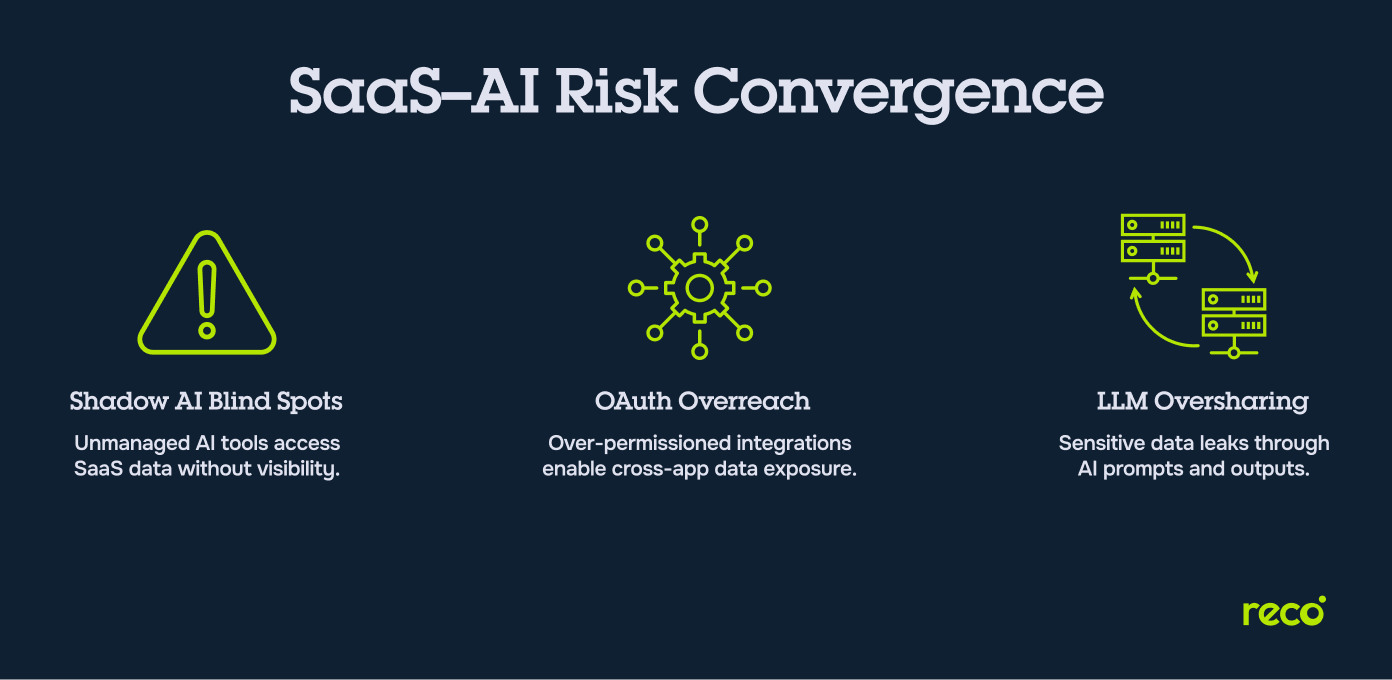
As AI adoption accelerates inside SaaS environments, risk is increasingly concentrated at the boundary between applications, identities, and AI tools. The biggest issues are driven less by isolated misconfigurations and more by how SaaS data, access paths, and AI capabilities intersect.
The Rise of Shadow AI and Unmanaged Tools
Shadow AI includes AI tools and embedded AI features adopted outside formal security and governance processes. Employees can add AI apps or enable AI features inside existing SaaS platforms without centralized visibility, creating blind spots around data access, retention, and usage. Without an inventory, teams cannot reliably track which AI systems can access business data and under what conditions.
OAuth Abuse and Lateral Movement Across SaaS and AI
OAuth and API integrations often connect SaaS apps to AI tools. When users grant broad scopes, AI services can inherit extensive access across connected SaaS environments. This enables lateral movement where one over permissioned integration exposes multiple data sources across SaaS and AI layers without triggering traditional alerts.
Insider Risk from Oversharing Sensitive Data via LLMs
AI systems, especially large language models, introduce new insider risk patterns. Users may share sensitive or regulated data through prompts, file uploads, or AI-enabled features inside SaaS apps. Once data enters AI workflows, it can resurface through outputs, logs, or downstream processing, creating compliance and data exposure risk that is difficult to detect after the fact.
When SSPM and AI Governance Tools Are Complementary
SSPM and AI governance work best together when risk spans SaaS configuration, identity, and AI behavior. The overlap is strongest when AI is built into SaaS platforms and when SaaS data and access paths feed AI systems.
- AI Embedded Inside SaaS Applications: SaaS platforms now include built-in AI features that process user data. SSPM covers configuration, integrations, and permissions. AI governance and AI SPM cover how AI features use data and how AI systems behave at runtime, including misuse and sensitive data exposure.
- SaaS Apps Acting as Data Sources for AI Models: SaaS apps often provide training, grounding, or inference data. SSPM can show which apps are connected and which access paths exist, but it stops once data enters AI pipelines. AI governance and AI SPM extend coverage by monitoring data use in models and pipelines and flagging exposure or misuse tied to AI processing.
- Identity and OAuth Risk Spanning Both Layers: OAuth grants and API connections link SaaS apps to AI tools. SSPM highlights over permissioned integrations and risky scopes in SaaS. AI governance and AI SPM address how those permissions affect access to models, datasets, and pipelines, including unauthorized use or escalation across the AI supply chain.
- Why SSPM Alone or AI Governance Alone is Often Insufficient: SSPM does not assess model misuse, runtime behavior, or training and grounding data exposure. AI governance and AI SPM can miss the SaaS configuration and integration paths that enabled access in the first place. Using both closes gaps across SaaS posture, identity, and AI lifecycle risk.
Leading SSPM and AI Governance Tools for SaaS and Copilot Environments
Security teams use a mix of SSPM and AI-focused tools to manage SaaS, identity, and AI risk. The platforms below show how different tools approach security across SaaS and AI-enabled workflows.
1. Reco (SSPM with AI-Aware Governance)
Reco is an SSPM platform focused on securing SaaS environments through deep visibility into configurations, identities, and OAuth-based integrations. It extends traditional SSPM by adding AI-aware context, surfacing AI usage and AI-related exposure that originates from SaaS applications, including embedded AI features and third-party AI integrations.
Best suited for: Organizations that want strong SaaS posture management while also gaining visibility into AI usage and AI-driven risk emerging from SaaS data, identities, and integrations.
2. CrowdStrike Falcon Shield (SSPM)
CrowdStrike Falcon Shield is an SSPM offering focused on SaaS configuration posture and identity-related exposure across connected SaaS applications. It is positioned to help security teams identify misconfigurations and risky access settings in SaaS environments.
Best suited for: Organizations that want SSPM coverage for SaaS posture and access risk, without expanding into AI model governance or AI lifecycle controls.
3. AppOmni (SSPM)
AppOmni is a SaaS Security Posture Management (SSPM) platform that continuously monitors SaaS configurations, user permissions, and third-party connections to help security teams reduce risk, detect misconfigurations, and remediate threats across their SaaS estate. It provides centralized visibility into SaaS posture with real-time insights and prioritized risk alerts, helping organizations maintain secure SaaS environments.
Best suited for: Organizations that want comprehensive SaaS posture monitoring and continuous risk detection across their SaaS portfolio, with visibility into configurations, access permissions, and integration exposure.
4. Obsidian Security (SSPM and Access Governance)
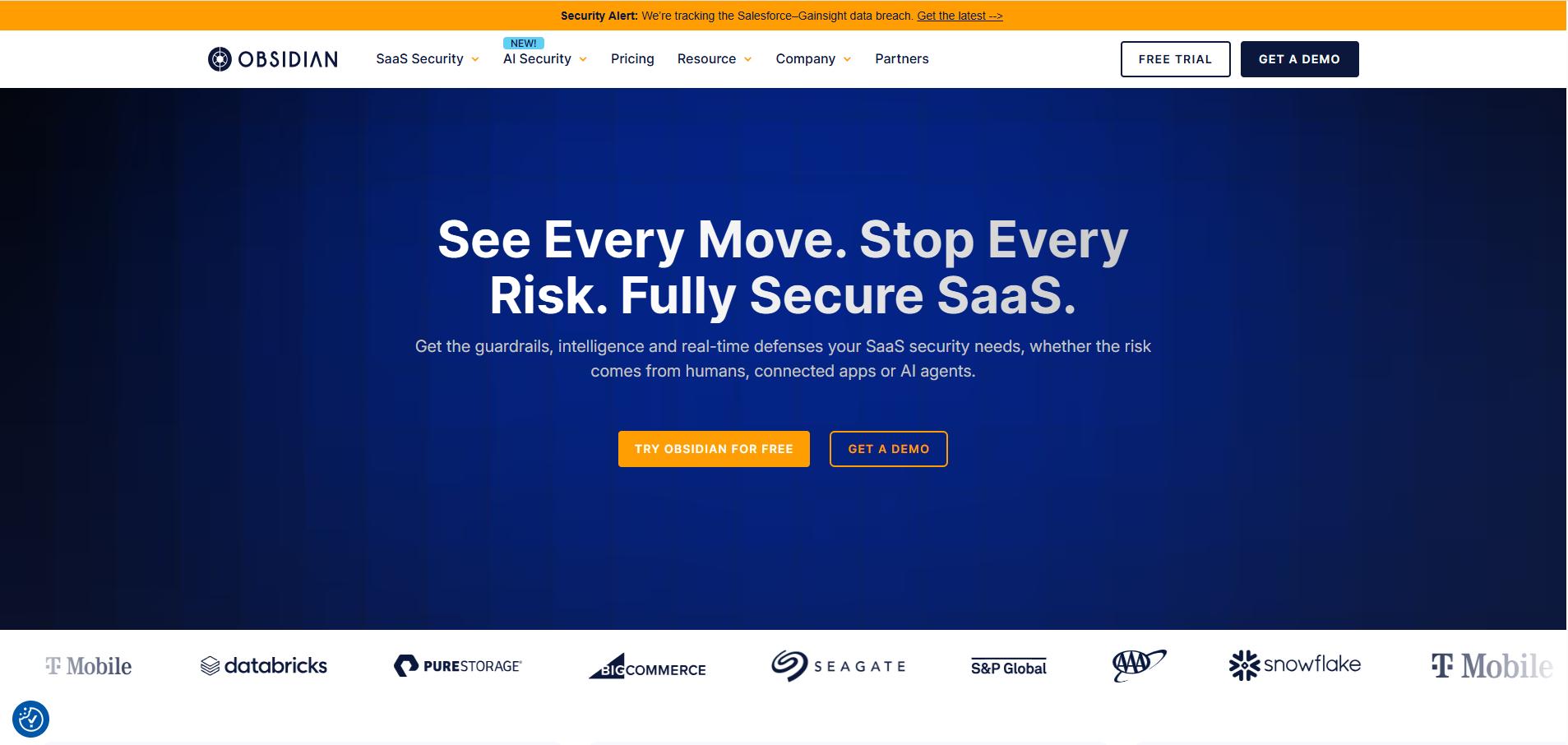
Obsidian Security is a SaaS security platform that combines SaaS Security Posture Management (SSPM) with identity-centric threat detection and access governance. It provides continuous visibility into SaaS application posture, user privileges, integration risk, and anomalous activity, helping teams identify misconfigurations, excessive permissions, and suspicious behaviors in real time.
Best suited for: Organizations that want a unified approach to SaaS posture, identity risk, and access governance with integrated threat detection and compliance signaling, rather than standalone posture management alone.
5. Nudge Security (SaaS Discovery and Identity)
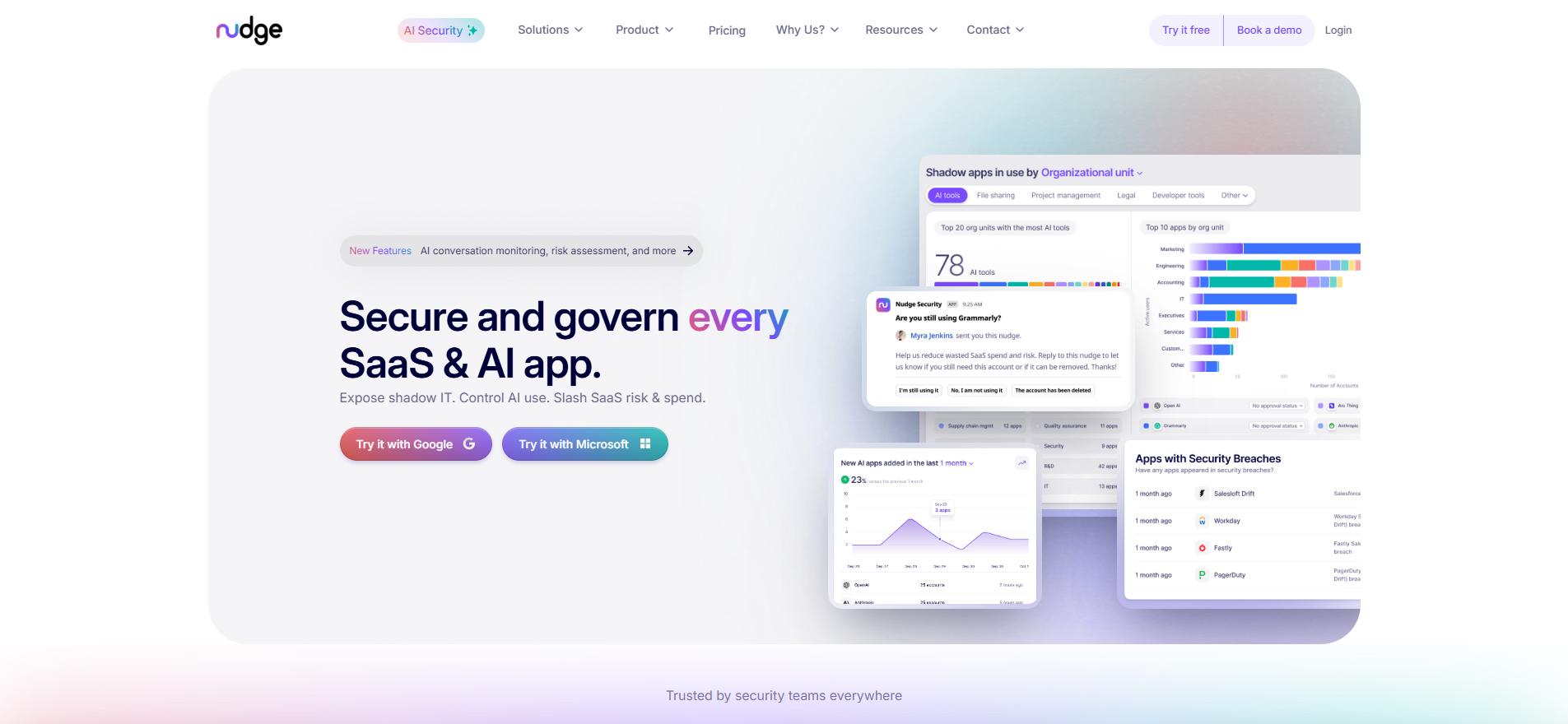
Nudge Security is a SaaS security and governance platform focused on continuous discovery of SaaS and GenAI applications, user identities, OAuth grants, and integrations across the organization. It builds a centralized inventory of both sanctioned and unsanctioned SaaS usage, helping teams understand where identity and access risk originates.
Best suited for: Organizations that require comprehensive discovery of SaaS and AI usage, with strong identity and OAuth visibility, particularly in environments with widespread shadow SaaS and shadow AI adoption.
6. Valence Security (SSPM)
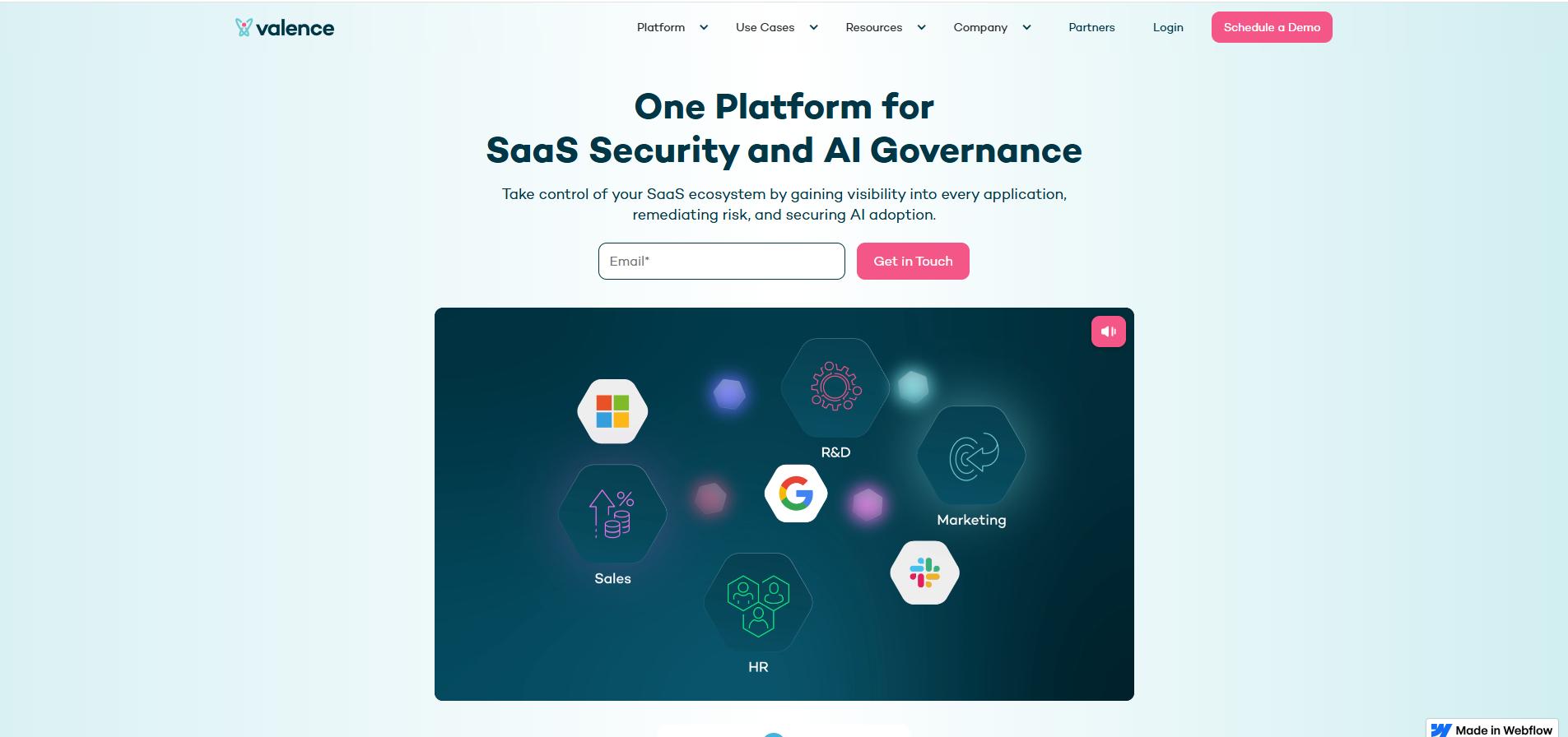
Valence Security provides a SaaS security platform centered on SaaS Security Posture Management (SSPM), continuous discovery, risk remediation, and identity threat detection and response. Its SSPM capabilities help teams monitor configurations, permissions, integrations, and misconfigurations across connected SaaS applications while offering remediation guidance and policy enforcement.
Best suited for: Organizations that want a robust SaaS posture management solution with integrated risk remediation and identity-centric monitoring to reduce misconfigurations, excessive access, and SaaS-to-SaaS integration risks.
7. SpinOne (SSPM and SaaS Data Protection)
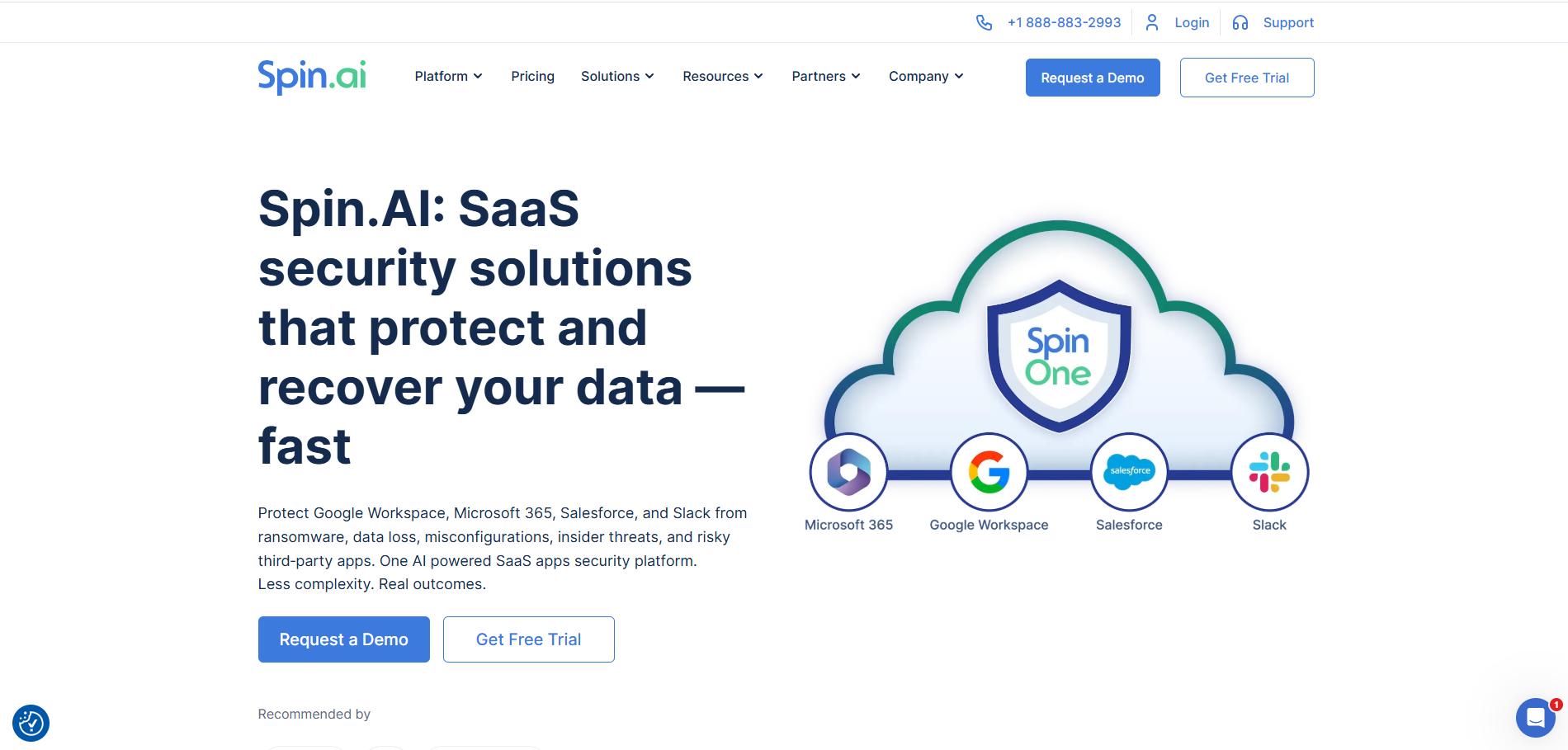
SpinOne is an all-in-one SaaS security platform that combines SSPM with SaaS data protection, including data leak prevention, backup and recovery, and ransomware detection and response for major SaaS applications like Google Workspace, Microsoft 365, and Salesforce. The platform delivers continuous visibility into misconfigurations, permissions, and third-party apps while protecting SaaS data from leaks, loss, and threats.
Best suited for: Organizations that want to combine SaaS posture management with built-in SaaS data protection, including data leak prevention, backup, and ransomware resilience.
8. Grip Security (SaaS Discovery and Access Governance)
Grip Security is a SaaS security platform built around identity-first discovery, governance, and risk control across the enterprise SaaS layer. The platform continuously uncovers sanctioned and shadow SaaS applications, tracks user identities and access relationships, and prioritizes identity-related risks, integration exposures, and misconfigurations.
Best suited for: Organizations that need broad SaaS discovery and identity governance with continuous visibility into SaaS usage, shadow SaaS and shadow AI risk, and centralized control of access and identity risk across their SaaS estate.
Key Features to Evaluate Across SSPM and AI Governance Tools
As SaaS and AI risks converge, the differences between SSPM and AI governance become most pronounced during the tool selection process. This table highlights practical criteria that show where each category provides control, where it falls short, and how they work together.
How to Choose Between SSPM, AI Governance, or Both
Your decision should be driven by where AI touches SaaS data and identities, and how much model and pipeline oversight you need beyond SaaS admin controls. More specific:
Assess Your SaaS and AI Adoption Surface
If your exposure is concentrated in business-critical SaaS applications that you can connect to and monitor through APIs, SSPM is the practical starting point. If AI services, embedded AI features, or AI tooling usage is distributed across teams and environments, AI governance and AI-SPM become necessary to cover what sits outside SaaS configuration boundaries.
Identify Where Sensitive Data Flows Into AI
When sensitive data exposure is primarily tied to SaaS settings, integrations, and permissions, SSPM addresses the most direct control points. When SaaS data is used to train, ground, or support inference in AI systems, AI governance and AI-SPM are needed to assess how that data is used inside AI pipelines and what can be exposed through runtime behavior, outputs, or logs.
Understand Identity and Access Risk Exposure
If the main concern is risky OAuth grants, broad scopes, and over-permissioned integrations inside SaaS apps, SSPM provides the right visibility into those access paths. If the risk extends to who can access AI models, datasets, and pipelines, and how authorization applies across the AI supply chain, AI governance and AI-SPM are the better fit.
Determine Compliance and Audit Requirements
SSPM supports SaaS-focused audit needs by documenting configuration posture and access context inside connected SaaS environments. AI governance and AI-SPM are required when teams need audit trails, approvals, traceability, and model lineage evidence tied to AI usage and data handling.
Plan for Scale as AI Usage Grows
As AI adoption expands through embedded AI features and third-party tools connected through OAuth and APIs, gaps emerge between SaaS posture visibility and AI system oversight. Using both tool categories together reduces blind spots by covering SaaS configuration and integration exposure alongside AI inventory, data governance, and runtime misuse monitoring.

Dr. Tal Shapira
Cofounder & CTO at Reco

Tal is the Cofounder & CTO of Reco. Tal has a Ph.D. from Tel Aviv University with a focus on deep learning, computer networks, and cybersecurity and he is the former head of the cybersecurity R&D group within the Israeli Prime Minister's Office. Tal is a member of the AI Controls Security Working Group with CSA.

Expert Insight: Avoid Blind Spots When Evaluating SSPM vs AI Governance Tools
One mistake I see often is teams evaluating SSPM and AI governance tools in isolation. In practice, the highest-risk paths sit at the intersection of SaaS, identity, and AI, not neatly inside one category. If you want to avoid blind spots, focus on how access and data actually flow.
What to look for during evaluation:
- Start with OAuth and Identities: Trace how AI tools inherit permissions from SaaS users or service accounts. Over-permissioned OAuth grants are often the real exposure point.
- Follow the Data, Not the Category Labels: Identify which SaaS apps feed data into AI tools for inference or enrichment, then ask what visibility you lose once that data leaves SaaS boundaries.
- Validate Evidence Across Layers: Check if your tools can connect SaaS configuration context with AI usage signals, even if they don’t manage the full AI lifecycle.
Key Takeaway: The safest evaluations don’t ask “SSPM or AI governance?” They ask where identity, data, and AI intersect, and choose coverage that closes gaps across all three.
How Reco Bridges SSPM and AI Governance Effectively
Reco is an identity-centric SaaS security platform with AI-aware context that links SaaS posture signals to AI usage risk from SaaS apps and integrations. Below is how it bridges SSPM and AI governance across visibility, identity, and access paths.
- Unified Visibility Across SaaS, AI Apps, and Identities: Reco brings SaaS configuration posture, identity context, and OAuth-based integration visibility into a single view, then layers in an AI-aware context by surfacing AI usage and AI-related exposure that originates from SaaS applications and connected tools.
- Continuous Monitoring of Permissions, OAuth, and AI Usage: Reco focuses on permissions and OAuth relationships that shape access inside SaaS environments, helping teams track changes in access scopes and integrations that connect SaaS systems to external tools, including AI tools.
- Detection of Risky Data Flows into AI Tools: By highlighting SaaS to AI integration paths, especially OAuth grants and API connections that give AI tools access to SaaS data, Reco supports the identification of high-risk data exposure routes that originate from SaaS applications and user-authorized connections.
- Identity-Centric Risk Context Across SaaS and AI: Reco’s bridge is identity-driven, tying risk back to the user or integration identity that authorized access, which is critical when AI tools inherit the same permissions as the user who connected them.
- Policy Enforcement without Heavy Agents: In an API connected SSPM approach like the one described for Reco, policy action is centered on SaaS admin controls and integration governance, such as reviewing and removing risky OAuth grants, rather than relying on endpoint agents to observe SaaS configuration and integration state.
Conclusion
SSPM and AI governance tools solve different problems that increasingly overlap as AI becomes embedded in SaaS workflows. SSPM secures SaaS configuration, identities, and integrations, while AI governance focuses on model behavior, data usage, and AI-specific risk. As SaaS data and OAuth access feed AI systems, using only one approach creates visibility gaps.
Organizations with growing AI adoption benefit most from combining both, ensuring SaaS posture, identity risk, and AI usage are governed together. The key is understanding where control shifts from SaaS configuration to AI behavior and applying the right tools at each layer, aligned with an AI management system’s standard for governance.
How do SSPM tools differ from AI governance or AI-SPM platforms?
SSPM tools focus on securing SaaS applications through configuration posture, identities, and OAuth-based integrations. AI governance and AI-SPM platforms focus on AI systems themselves, including models, pipelines, training and grounding data, and runtime behavior. The distinction is primarily about which layer of risk each tool is designed to control.
Can SSPM tools detect risks from AI embedded inside SaaS apps?
- SSPM tools can detect AI-related exposure when it is tied to SaaS configuration, permissions, or integrations.
- They cannot assess AI model behavior, prompt usage, or inference logic.
- AI governance tools are required to evaluate AI behavior beyond SaaS settings.
Do organizations need both SSPM and AI governance tools in 2026?
In many environments, yes. As AI becomes embedded in SaaS platforms and SaaS data feeds AI systems through OAuth and APIs, relying on a single control layer often leaves visibility gaps. SSPM governs how access is granted inside SaaS, while AI governance governs how AI systems use that access.
How does Reco handle AI risks introduced through SaaS integrations?
Reco focuses on the SaaS access paths that enable AI exposure and ties that risk back to identities and permissions.
- Surfaces OAuth grants and API connections that give AI tools access to SaaS data
- Maps the exposure to the user or the integration identity that authorized the connection
- Helps teams spot risky SaaS-to-AI data paths that originate from integrations and embedded AI features
Does Reco replace AI governance tools or complement them?
Reco complements AI governance tools by covering SaaS posture and integration-driven AI exposure, while AI governance focuses on model-level controls.
- Reco covers SaaS configuration, identity context, and OAuth-based integration risk
- AI governance and AI-SPM cover AI models, pipelines, training and grounding data, and runtime behavior
- Using both reduces blind spots across SaaS access paths and AI system risk
